skip to content

Faculty of Divinity

 
The Treasury, Diptych with New Testament Scenes: Coronation of the Virgin. Creator: Peter Roan. Source: https://www.flickr.com/photos/peterjr1961/3865192556/in/photostream/. Licence: CC BY-NC 2.0

The Faculty of Divinity is a vibrant and dynamic research community which hosts a number of conferences every year in addition to prestigious lectures and research seminars, and less formal reading groups.

Visitors are welcome at many of these events. Event details are available on individual pages listed in the table below:

Special Lectures

A number of established lectureships throughout the academical year regularly bring international figures from outside Cambridge to contribute to our research culture.

  • Jeremie Lecture 

    The Faculty of Divinity, University of Cambridge is pleased to announce the Jeremie Septuagint Lecture 2023-2024 by Emeritus Professor Mark Janse (Ghent University):


    "The Three Commandments: Hellenizing and / or Hebraizing the Old Greek and other early and later translations of the Hebrew Bible" (abstract below).


    The event will take place on the 8th of May at 5pm in the Runcie Room at the Faculty of Divinity, Cambridge. Everyone welcome, no registration required.


    ----


    The Three Commandments: Hellenizing and / or Hebraizing the Old Greek and other early and later translations of the Hebrew Bible


    According to the pseudepigraphical Letter of Aristeas, a curse would be pronounced on anyone adding, removing or displacing any word in the Septuagint translation of the Torah, echoing the commandments given by God to Moses in Deuteronomy. The ‘Three Commandments’ have dictated the translation techniques of the various translators of the Hebrew Bible into Greek, as well as appreciations of the quality of Septuagint Greek from late Antiquity up to the present day. Strict obedience to the three commandments results in a Hebraizing aka word-for-word, literal or source-text/language translation. A Hellenizing aka sense-for-sense, free or target-text/language translation, on the other hand, may result in ignorance of any or all of the ‘Three Commandments’ to a greater or lesser extent.


    In the first part of my lecture, I return to the placement of object clitic pronouns (OCPs) in the Septuagint. As is well known, OCPs are postverbal in the vast majority of cases, especially if they correspond with pronominal suffixes in the Hebrew Vorlage. The cases of preverbal placement are nevertheless indicative of the native speaker competence of the translators, as they can only be explained as reflexes of Wackernagel’s Law, an inherited Indo-European but not Semitic feature (Wifstrand 1950; Janse 1998, 2002; Lee 2018; Dhondt 2023). The contexts in which Wackernagel’s Law is triggered are well-known, but the question arises why we find both preverbal and postverbal OCPs in similar, or even identical, contexts. To better understand this variation, I present new evidence including indirect and direct OCP clusters and the placement of OCPs in relation to topicalized and focalized constituents, with due attention to the Hebrew Vorlage, textual variation and the position of the Septuagint within the history of the Greek language.


    In the second part of my lecture, I focus on Bible translations which are strictly Hebraizing. The best known early Greek translations are those by Aquila and Theodotion as well as the so-called Kaige recension. I discuss a number of peculiarities of such translations, which often result in unidiomatic or even ungrammatical Greek, with special attention to Aquila. By way of comparison, I present a number of medieval Spanish Bible translations, some of which are Hebraizing, resulting in interesting syntactic extensions reminiscent of Aquila’s translation technique. I conclude with the utterly Hebraizing Bible translation by the well-known unknown A.J.B. (Abbé) de Vay, with the unassuming title Biblia sacra ita exactè translata ut statim videatur quid refert unaquaeque vox textûs, quod nullus antea praestitit interpres (London 1817?), whose efforts to be a fidus interpres failed miserably, yet amusingly.


    –––––––––––––


    Dr Marieke Dhont


    Affiliated Lecturer, Faculty of Divinity, University of Cambridge

    Foundation Year Teaching Associate, University of Cambridge

    Bye-Fellow, Girton College, Cambridge

    Director of Studies in TRPR, Gonville & Caius, Cambridge

    FWF Esprit Postdoctoral Researcher, Paris Lodron University Salzburg

    Done!Yes, will do.This is done.

    ReplyForward

    PH

  • 2026 Yerushah Lecture 

  • Wednesday 11 March,  5 p.m to 6:30pm Faculty of Divinity - Runcie Room

  •  Embodying change: Jewish women treading new pathways. The 2026 Yerushah Lecture

  • Rabbi Dr Lindsey Taylor-Guthartz and Soferet Dr Jen Taylor Friedman deliver the Faculty of Divinity's annual Yerushah lecture, exploring how women in Orthodox and egalitarian Jewish contexts have negotiated access to training, authority, and mastery.

The annual Yerushah Lecture in the Faculty of Divinity was established with a benefaction from the Righteous Persons Foundation, created by Steven Spielberg from the proceeds of his 1993 film Schindler’s List. ‘Yerushah’ is the Hebrew word for ‘heritage’. The Yerushah Lecture is devoted to Jewish heritage in all its aspects, with an emphasis on the transmission of Jewish identity and values across the generations. 


Inaugural and Valedictory Lectures

Conferences


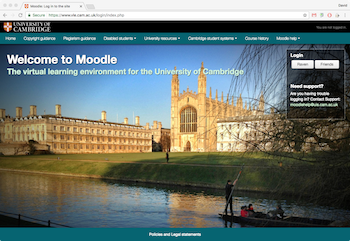
Moodle

Current students and supervisors can access the Faculty’s Moodle page by clicking on the image below.